


Project Overview:
Ubuntu Roots is expanding its mission across Africa with the Digital Facilities Initiative, a project focused on creating sustainable digital learning spaces in partnership with Chikondi Village School (Malawi), Bright Horizons Primary School (Nigeria), Unity Community Primary School (South Africa), and Education of Hope Africa (regional NGO).
The initiative transforms existing community spaces — such as local city halls, libraries, and youth centers — into digital classrooms equipped with projectors, laptops, and reliable internet access. These shared facilities serve as hubs where students, teachers, and residents can connect to the global classroom network powered by Ubuntu Roots.
Impact at a Glance:
- 3 countries connected: Malawi, Nigeria, and South Africa
- 500+ students with new access to online education
- Partnerships with local NGOs and municipal councils
1️⃣ Origins: From Classrooms Without Power to Connected Communities
The idea began in early 2024, when Ubuntu Roots volunteers in Malawi observed that Chikondi Village School had passionate teachers but no digital tools — not even a single computer. Yet, nearby, a local city hall occasionally used a projector for community movie nights powered by a small generator.
This sparked a question: what if that same space could be used for learning during the day?
Ubuntu Roots reached out to Education of Hope Africa, an NGO that opened schools across South Africa, to explore turning such community centers into multipurpose digital classrooms. Soon after, schools from Nigeria and South Africa joined, sharing similar stories of eager students and disconnected classrooms.

2️⃣ Collaboration Design: Building the Digital Bridge

The project was built through partnerships that valued local leadership and sustainability.
In Malawi, Ubuntu Roots worked with local councils to equip a community hall with a projector, three laptops, and portable solar panels, allowing classes to continue even without stable electricity.
In Nigeria, Bright Horizons Primary School collaborated with a local telecommunications provider to establish a low-bandwidth internet network capable of supporting virtual lessons and resource sharing.
In South Africa, the Education of Hope School integrated its existing computer lab with Ubuntu Roots’ global learning platform, enabling live sessions between students and volunteer teachers worldwide.
3️⃣ Implementation: Technology in Action
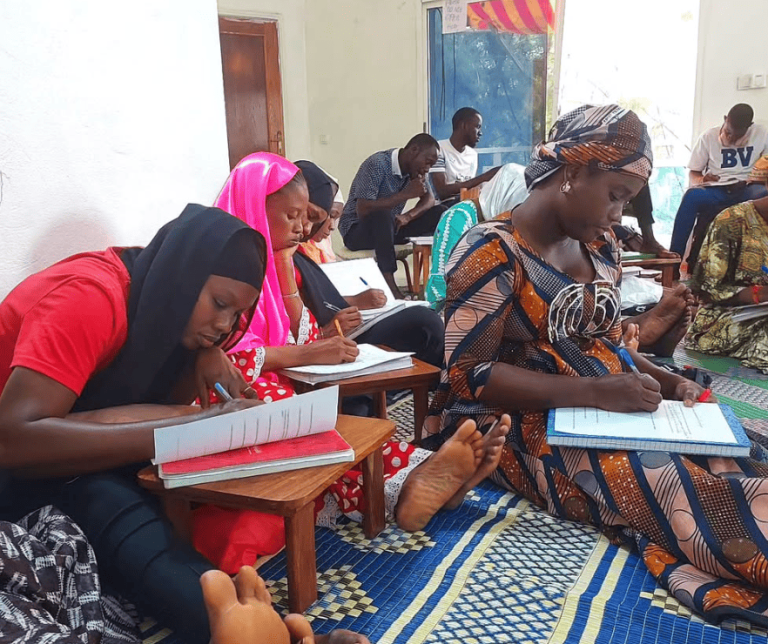
By mid-2024, the first Digital Facility opened in Malawi. The community hall’s white wall became a classroom screen, and within days, students were attending live lessons with educators from Asia, Europe, and Africa.
In Nigeria, students at Bright Horizons used refurbished laptops to participate in virtual science experiments, while teachers received training on integrating storytelling and media into core subjects.
In South Africa, the Education of Hope School held its first “Global Learning Week,” where students presented sustainability and culture projects to peers abroad through live video sessions.
Parents and community members also began using these centers in the evenings for digital literacy workshops and entrepreneurship training, ensuring the facilities benefitted the entire community, not just students.
4️⃣ Future Vision: Expanding the Digital Horizon
The Digital Facilities Initiative has shown that transformation doesn’t require new buildings; only new ideas for existing spaces.
Ubuntu Roots now plans to scale this model to nine additional schools across Africa by 2026, focusing on underserved regions with limited infrastructure. The next phase includes:
🔋 Solar-powered computer pods for remote villages
📶 Offline-capable servers preloaded with Ubuntu Roots content
🧑🏽🏫 Teacher mentorship programs for digital lesson design
As one student shared during her first online session,